
For many Fort Worth families, choosing a natural approach to pregnancy and health is about more than avoiding unnecessary interventions—it’s about truly understanding how the body works. The Creighton Model FertilityCare System (CrMS) offers exactly that: a structured, science-based way to practice fertility awareness and gain confidence in your body’s natural rhythms.

At its heart, CrMS provides couples with knowledge and support through personalized instruction, charting tools, and ongoing guidance from trained FertilityCare practitioners. Many families begin with introductory classes, where they learn how to observe and record biomarkers and apply that knowledge to everyday decisions about fertility and wellness.
What Is the Creighton Model FertilityCare System?
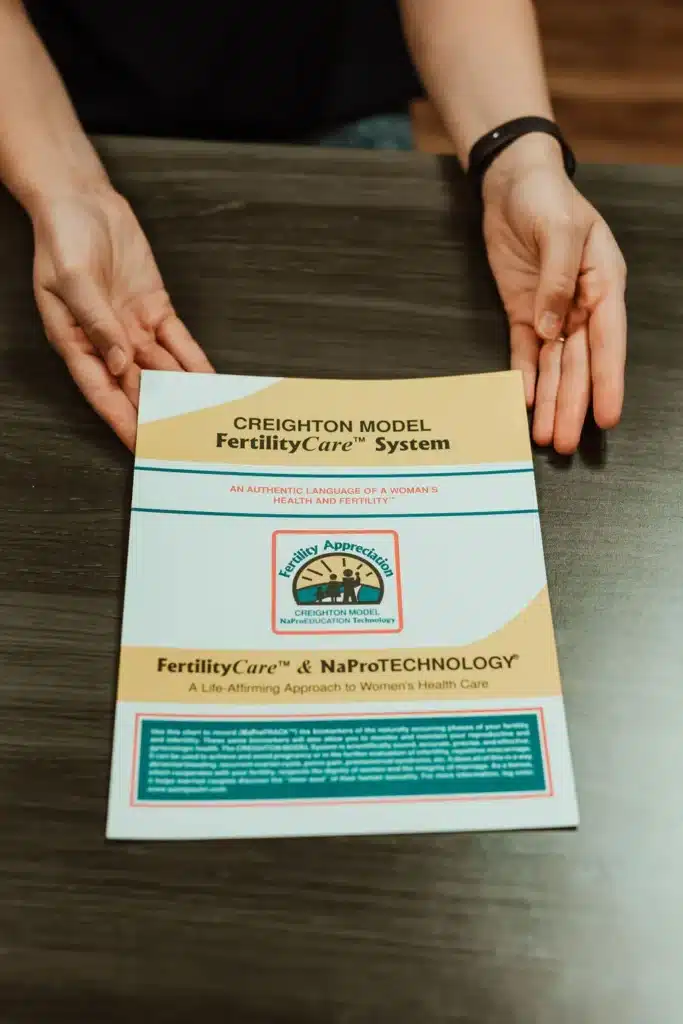
The Creighton Model FertilityCare System has been used worldwide since the 1970s and was developed at Creighton University. Unlike cycle apps that rely on averages, CrMS is based on real-time daily observations of cervical mucus and bleeding patterns, which are directly tied to hormonal changes. This makes charting both accurate and medically useful.
Families often choose CrMS for its dual purpose: it can be used to achieve pregnancy or to avoid pregnancy naturally without hormones. It is also a tool for identifying underlying health issues such as irregular cycles, abnormal bleeding, or hormonal imbalance.
Many couples combine Creighton with fertility and prenatal services to support natural family planning within a holistic care model.
Unique insight: CrMS isn’t just for family planning. A woman’s charts can reveal early warning signs of thyroid issues, PCOS, or endometriosis, providing valuable health data long before symptoms might otherwise be diagnosed.
How CrMS Works: Fertility Awareness and Cycle Tracking
CrMS is grounded in fertility awareness through daily cycle tracking. Women observe mucus patterns and record them in a standardized charting system. Clinical research shows effectiveness rates of 96–99% for avoiding pregnancy with proper use, comparable to many hormonal contraceptives.
Couples can also use the same information to optimize conception. For example, identifying a clear, stretchy mucus pattern signals peak fertility.
Beyond planning, charting can uncover health concerns. Physicians trained in NaProTECHNOLOGY use CrMS charts to diagnose and treat conditions like luteal phase deficiency, PCOS, or recurrent miscarriage.
At BirthPointe, families integrate cycle charting into everyday life through structured education and supportive follow-ups.
Unique insight: CrMS has a globally standardized language. This ensures any FertilityCare practitioner or NaPro-trained physician can interpret charts consistently, making it both personal and medically credible.
Medically Informed Care with CrMS
One of the strongest advantages of CrMS is its integration with NaProTECHNOLOGY, a medical science that addresses underlying reproductive health issues rather than masking symptoms with hormones.
For example, a Fort Worth couple struggling with infertility might discover through charting that shortened luteal phases suggest a progesterone deficiency. Instead of turning to IVF immediately, a physician can prescribe tailored bioidentical support based on the woman’s unique cycle.
Families often appreciate how this approach aligns with holistic women’s health, combining modern medical insight with respect for the body’s natural design.
Unique insight: Conventional OB/GYN visits often overlook subtle cycle irregularities. CrMS empowers women with data to advocate for themselves, ensuring their concerns are taken seriously.
Getting Started: Creighton Intro Classes and Follow-Ups
The journey begins with a Creighton intro class, typically a 90-minute session led by a certified FertilityCare practitioner. Couples learn how to observe biomarkers, chart daily, and apply their findings.
Follow-up meetings—usually eight in the first year—build confidence, ensure accuracy, and allow for questions. This structure is what makes CrMS so effective compared to self-taught methods.
For Fort Worth families, access to FertilityCare practitioners makes CrMS approachable and affordable compared to long-term hormonal methods or advanced fertility treatments. If you’re ready to begin, schedule a Creighton class today.
Unique insight: Ongoing practitioner support is the key to success. Families who commit to structured follow-ups usually gain confidence and accuracy within 3–6 months, according to FACTS About Fertility.
Comparing CrMS to Other Fertility Awareness Methods
How does CrMS differ from other fertility awareness methods?
- Creighton vs Sympto-Thermal: Sympto-Thermal adds basal body temperature tracking, which can be affected by illness or stress. CrMS focuses on standardized mucus observations, reducing variability.
- Creighton vs Billings: Billings also uses mucus observations but relies more on subjective description. CrMS employs globally standardized codes, making it reproducible and medically applicable.
Families in Fort Worth often appreciate CrMS because it integrates directly with NaProTECHNOLOGY, meaning the same charts that guide family planning can also guide medical treatment.
Unique insight: CrMS is especially empowering postpartum, when hormonal contraceptives may not be ideal during breastfeeding. Charting offers a safe, hormone-free way to manage fertility naturally.
Who Benefits Most from CrMS?
CrMS can benefit a wide range of families:
- Couples preparing for pregnancy who want to maximize the chances of conception naturally.
- Women with health concerns such as PCOS or recurrent miscarriage, since CrMS charts provide medically actionable insights.
- Families seeking a natural birth who want fertility awareness that aligns with holistic care.
At BirthPointe, many families combine CrMS with prenatal services for a full spectrum of support.
Unique insight: Even women approaching menopause find value in CrMS, since charting helps clarify cycle changes and supports long-term health monitoring.
Quick Takeaways
- The Creighton Model FertilityCare System provides standardized, medically informed fertility awareness and cycle tracking.
- It can be used to achieve or avoid pregnancy naturally, while also identifying health concerns.
- Effectiveness rates reach 96–99% with proper use.
- Families start with intro classes and continue with guided follow-ups.
- Unlike other methods, CrMS integrates with NaProTECHNOLOGY for medical evaluation and treatment.
- For Fort Worth families, CrMS aligns with holistic, natural health and empowers informed decisions.
FAQs
1. How effective is the Creighton Model for avoiding pregnancy?
With correct use, CrMS is up to 99% effective, comparable to hormonal contraceptives (St. Joseph FertilityCare Center).
2. Can CrMS help me if I have irregular cycles or PCOS?
Yes. CrMS highlights patterns that help physicians trained in NaProTECHNOLOGY diagnose and treat underlying issues (FertilityCare Centers of America).
3. Do my partner and I need to attend classes together?
Partner participation is optional but encouraged. Many couples report greater confidence when they learn CrMS together (Queen of Hearts Fertility).
4. How is CrMS different from other natural family planning methods?
CrMS uses a standardized, medically recognized charting system, unlike other methods that rely more heavily on subjective observation (FACTS About Fertility).
5. Is CrMS faith-based or science-based?
Although widely used by faith-based communities, CrMS is a science-based, medically validated method suitable for anyone seeking natural fertility care (Frontiers in Medicine).
Conclusion
The Creighton Model FertilityCare System offers Fort Worth families a reliable, science-based way to understand fertility, plan pregnancies, and uncover health concerns—without hormones or guesswork. With effectiveness rates on par with contraceptives, integration with NaProTECHNOLOGY, and ongoing practitioner support, it bridges the gap between natural family planning and modern medicine.
By starting with introductory classes at BirthPointe, couples can gain confidence, clarity, and control over their reproductive health in a way that supports both natural birth philosophies and long-term wellness.

Have you tried a fertility awareness method before? Whether it was charting with an app, learning the Creighton Model, or exploring another natural option, your experience could inspire other Fort Worth families. Share your story in the comments — what worked well, what challenges you faced, and what advice you’d give to someone just starting out. Your perspective could help another family take their first step with confidence.
The absolute best place you can trust with your privacy and trust when it comes to pregnancy. My experience as a man with BirthPointe has been phenomenal. They loved and care for my wife in a special way. After finding out my wife and I were expecting, we toured a couple birthing centers around dwf, but none of them compared to BirthPointe. The resources and knowledge offered by them were nothing more than exceptional and comforting. And when i was in any place of doubt or worry, they led me to peace. I trusted them with my first daughter, and I will trust them again for our second. -Jacob Salois*
References
- Stanford, J. B., & Porucznik, C. A. (2017). Enrollment, Childbearing Motivations, and Intentions of Couples in the Creighton Model Effectiveness, Intentions, and Behaviors Assessment (CEIBA) Study. Frontiers in Medicine
- FertilityCare Centers of America. NaProTECHNOLOGY Overview. FertilityCare.org
- St. Joseph FertilityCare Center. Effectiveness of the Creighton Model System. St. Joseph FertilityCare
- FACTS About Fertility. Typical Use Effectiveness of the Creighton Model: A Review of Research. FACTS About Fertility
- Queen of Hearts Fertility. Creighton Model FertilityCare Education. Queen of Hearts Fertility